 You Are Viewing The Illinois Location.
When we talk with homeowners about comfort, allergies, and breathing easier, one topic always surprises people: dust mites. These microscopic pests live in nearly every home, and while they’re invisible, their impact on your air is very real. For homeowners concerned about comfort and indoor air quality in Lake in the Hills, understanding dust mites is a smart first step toward healthier air.
As your local comfort experts, we want to answer the most common questions we hear—and explain what all of this means for your IAQ.
How Many Dust Mites Fit on the End of a Pin?
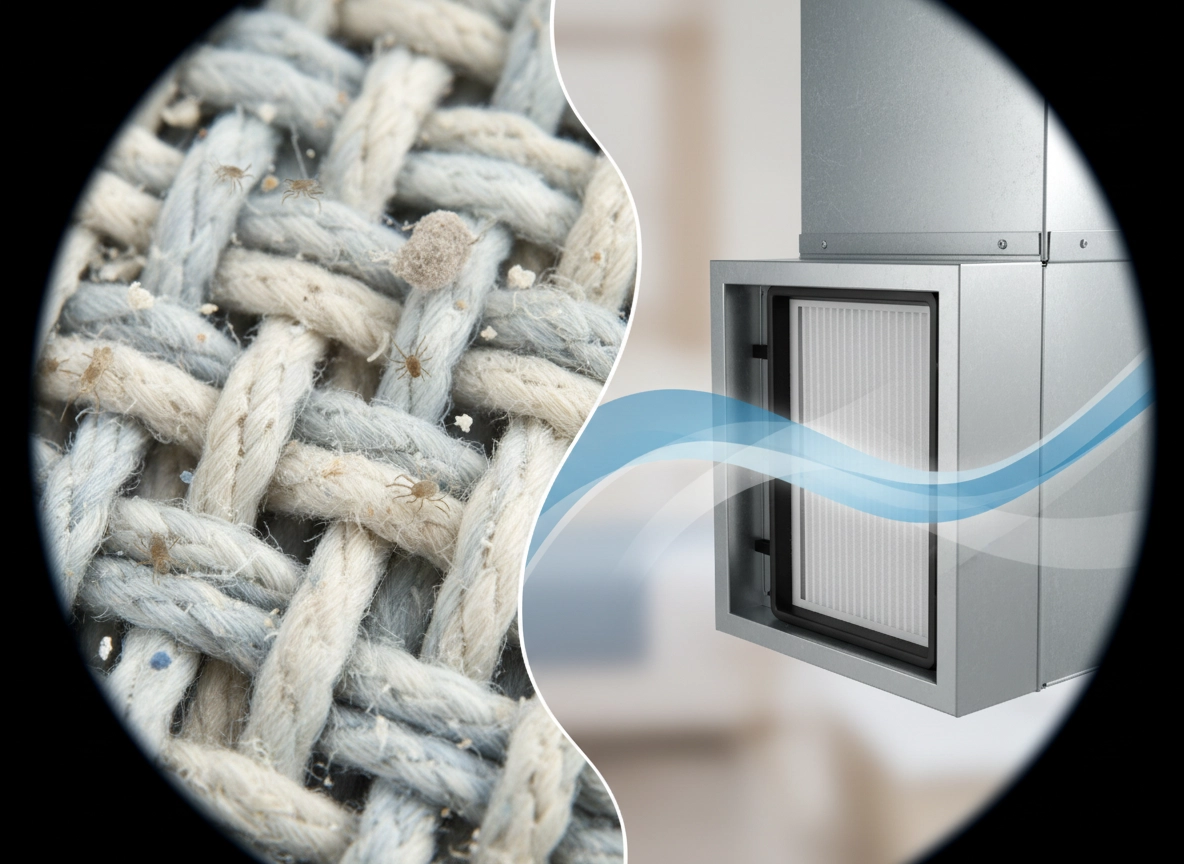
Dust mites are incredibly small, measuring about 0.2–0.3 millimeters long. That means hundreds of dust mites can fit on the end of a single pin. You’ll never see them crawling around, but their size doesn’t stop them from affecting your home. What matters most isn’t the mites themselves—it’s what they leave behind.
How Many Dust Mites Are in Your Home?
While exact numbers vary, experts estimate that millions of dust mites can live in a typical home, with the highest concentrations found in mattresses, pillows, upholstered furniture, and carpets. A single mattress alone may contain anywhere from 100,000 to several million dust mites. Warmth, humidity, and soft fabrics make the perfect breeding ground.
What Do Dust Mites Eat?
Dust mites don’t bite people or animals. Instead, they feed on dead human skin cells that naturally shed every day. In fact, the average person sheds enough skin daily to feed thousands of dust mites. They also thrive in humid environments, which is why controlling moisture in your home is critical for reducing their population.
How Often Do Dust Mites Poop in a Day?
Here’s the uncomfortable truth: each dust mite produces roughly 10–20 fecal pellets per day. These microscopic particles are one of the most common indoor allergens. When disturbed by walking, vacuuming, or making the bed, these particles become airborne and are easily inhaled—triggering allergies, asthma, and respiratory irritation.
And What Does All of This Mean for IAQ?
Dust mites themselves aren’t the biggest problem—their waste is. Poor filtration, excess humidity, and stagnant air allow allergens to circulate freely throughout your home. That’s where a professional IAQ installation makes a measurable difference.
High-efficiency air filters, whole-home air cleaners, humidity control systems, and proper ventilation all work together to trap allergens, reduce moisture, and continuously refresh your indoor air. As your heating and cooling system runs, these IAQ solutions help protect your family from what you can’t see.
When allergies flare up, or your home feels dusty no matter how much you clean, poor indoor air quality is often the hidden cause. A properly installed IAQ system works behind the scenes to reduce airborne allergens, improve airflow, and support overall respiratory health. Investing in indoor air quality solutions isn’t just about comfort—it’s about protecting your family’s long-term health and well-being.
We don’t just heat and cool homes—we help create healthier living environments you can feel confident breathing in every day.
You can always count on 24-Hour Home Comfort Services, your heating and cooling specialists.
 847-854-9909